
AISD Trustee Candidates’
Positions on the Arts & Creative Learning
MINDPOP invited the Austin ISD Trustee candidates to share their views on the arts and Creative Learning in the district. We thank the candidates for their commitment to education, service to the young people of Austin and for sharing their positions with us. Read their responses below.
Early voting from October 19-30 – Election Day is November 3
Cheryl Bradley
Candace L. Hunter
Jimmy Counihan
Laurie Solis
Edward M. Bradfield
Tricia Mitchell Kim
Jessica “Jessie” Neufeld
Kirk Becker
Pamela Mathai
Cynthia Soliz
Sarah Dille
Marie Lebron
Alex San Martin
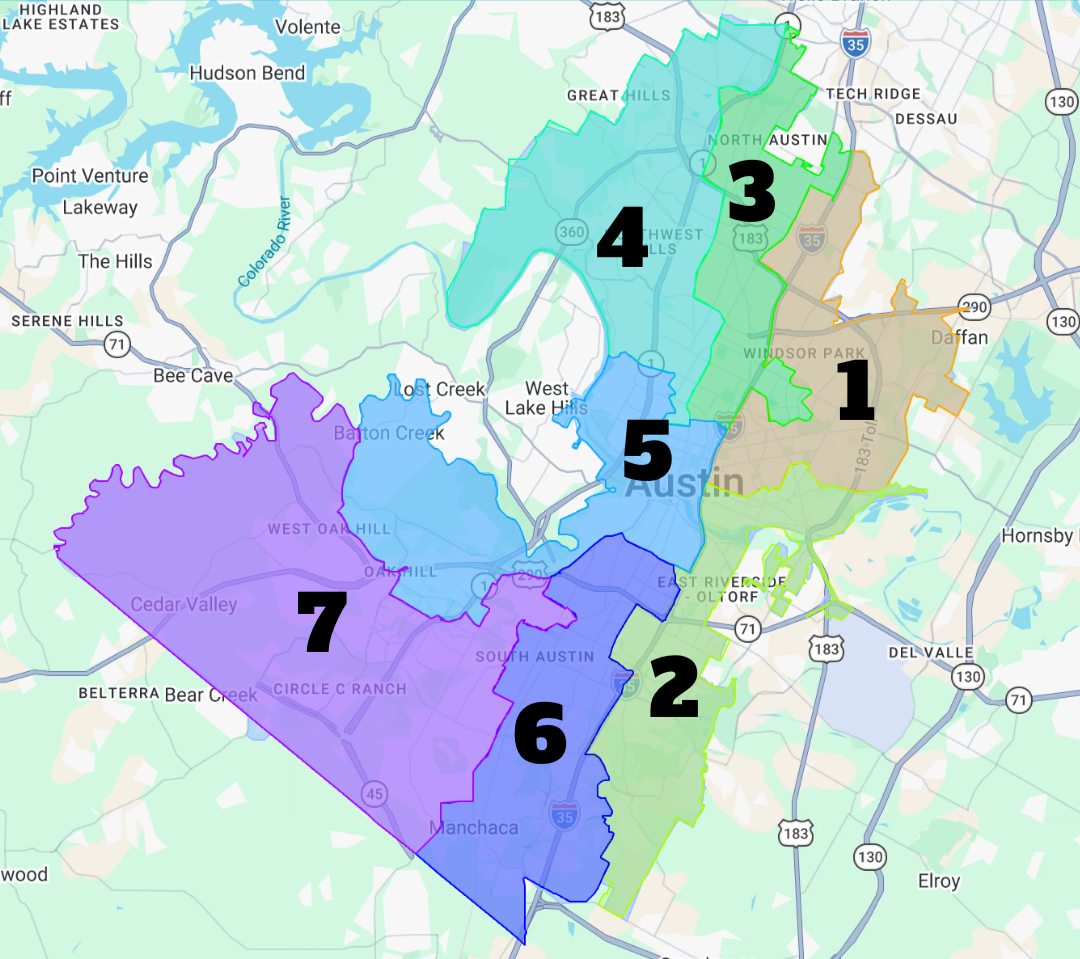
District 1
Cheryl Bradley
Has yet to respond.
Candace L. Hunter
1. How have the arts and creative learning impacted you – in your career, education, or life experience, if at all?
Arts literally kept me off the streets of East Austin. My mother enrolled my in everything the Rosewood Community center offered. Including dance, tap, twirl, and ballet.
2. What value do the arts, creative learning, and the Creative Learning Initiative have for students and teachers in Austin ISD, if any? (e.g. student engagement, academic achievement, and preparation for college, career and life)
The reality of education is most kids don't come to school for core instruction (English, Math, Social Studied, or Science). They come for the co-curricular activities like Fine Arts.
3. How will you prioritize and/or advocate for the arts and creative learning as an Austin ISD trustee, if at all?
I've always supported the Arts in Austin ISD, through my support, and attendance, and for as long as we can funding.
4. Please add any additional information voters should know regarding your views on the arts and creative learning.
Right now and times past the world can be ugly. The Arts bring beauty into our lives, and that's how we get through the ugly times.
District 4
Edward M. Bradfield
Has yet to respond.
Tricia Mitchell Kim
1. How have the arts and creative learning impacted you – in your career, education, or life experience, if at all?
How have the arts NOT impacted me?!
In my early 20s, I moved to New York City with $300 and a duffle bag. A legendary American choreographer gave me a scholarship to dance every day…
at Anderson High School, I danced as a Trojan Belle. I wore out the pages of my copy of the novel “The Princess Bride” and bonded with friends through music. I started going to see live bands in Austin at age 15, in any club with a minor stamp and a stage
…I saw “Hamilton” on London’s West End with my family, and heard an audience of Brits sing along with King George
…I was one of the first to earn Austin Community College’s associate’s degree in Musical Theater
…I tap dance on Wednesday evenings and belong to a songwriter club through which I have written a song each week for 120 consecutive weeks
…(I’ll stop now. There’s more).
Creativity makes everything better! The arts and creative learning teach and challenge, bring insight, buoy our spirits, and give us joy. The arts provide space for exploring and expressing the human experience. Making and practicing art provides personal, practical, logistical and community-enriching opportunities. The arts remind us that we’re not the first one ever to experience something. They grow our capacity to feel and empathize.
Contrary to how most people think, the arts and business are not separate. There is so much creativity in business and administrative detail in the arts.
2. What value do the arts, creative learning, and the Creative Learning Initiative have for students and teachers in Austin ISD, if any? (e.g. student engagement, academic achievement, and preparation for college, career and life)
In addition to simply introducing students to the arts, the core AISD Fine Arts classes in music, visual and performing arts provide students with opportunities to build skills.
Teachers who teach creatively engage their students and embed learning more deeply. I think everyone has a story about a teacher who ‘brought a subject to life’ for them. Because it’s really possible for subjects and school to be lifeless.
Students who pursue a fine art internalize the process of trying, practicing, making mistakes, improving and refining– which can be applied to everything. Research shows that students who pursue an art have better attendance and higher academic achievement.
Art isn’t extraneous.
3. How will you prioritize and/or advocate for the arts and creative learning as an Austin ISD trustee, if at all?
No one is contemplating cutting fine arts programs because it’s good or wise. We’re in a miserable public school funding season. As a trustee, to the extent possible with the amount of money we have, I will prioritize and advocate for the arts and creative learning. That is where my heart is.
I will also remind every teacher and young artist to keep going, keep creating, no matter what the circumstances. The arts save lives. The work moves you forward. Plants sprout through the cracks in the concrete.
4. Please add any additional information voters should know regarding your views on the arts and creative learning.
I am not aware of an AISD trustee with a strong fine arts background, especially like mine, combined with STEM and business training.
Voters can’t see the experiences I have had and how my identity and work as an artist enable me to see and solve problems in creative ways. But it’s all inextricable.
When my kids left home, as an alternative to crying, I enrolled and earned an Associate’s degree in the new Musical Theater program at Austin Community College. While ending and starting my next chapter, and especially after the pandemic, ALL I WANTED in my life was more singing & dancing. More stories. More expression, more emotions.
The work that artists do is deep and translatable to serving a community. I love all of the stories, especially those of families and children. I want to hear all about it. (I have no idea why trustees don’t reply to your emails, they are missing out!)
My bottom line view is that there is no well-rounded education with an artistic component. I can’t imagine D4 without its arts programs and will work really hard to emphasize the way that arts programs bolster academics and belonging, as well as make the world more beautiful.
Jessica “Jessie” Neufeld
1. How have the arts and creative learning impacted you – in your career, education, or life experience, if at all?
As a kid, I spent a lot of time either rehearsing for plays or taking acting classes. In addition to the joy it brought me, and the confidence and friendships it fostered, the character analysis and physical exploration of the script likely supported my critical thinking and reading comprehension. The opportunities to speak and perform helped enhance my ability to verbally express myself. Honing the art of storytelling helped me delve into emotions and how best to connect with people (the audience). And the teamwork! Learning comes naturally when things are fun, and there are a lot of opportunities for that in theater, and the arts more broadly.
My daughter is in the visual arts strand of the fine arts program at Lamar Middle School. It feeds my soul to know that she is able to grow that passion and to
watch it shape how she takes in the world around her. The Junior Vase competition she’s required to participate in does an incredible job of helping her learn how to tackle long-term (1-3 month) projects: developing planning and pacing skills for taking an abstract idea and making it a reality.
As an adult, casual singing and dancing with my kids has been a critical parenting tool for moving through tough moments, completing chores, and bonding with one another. Often we will make up songs to tasks that we then dance to as we complete them. It’s fun/goofy and the communal element pulls us together to get the job done with joy.
2. What value do the arts, creative learning, and the Creative Learning Initiative have for students and teachers in Austin ISD, if any? (e.g. student engagement, academic achievement, and preparation for college, career and life)
From the examples I provided in my first answer you can see the many ways the arts has positively impacted me and my family. I’m not intimately familiar with the Creative Learning Initiative but I understand and support culturally responsive teaching and see a lot of overlap between the two frameworks: learning through culture, creativity, and somatics strengthens student engagement and higher-level thinking. In addition, the level of agency students have when engaging in artistic and creative learning promotes critical thinking and fosters intrinsic motivation.
3. How will you prioritize and/or advocate for the arts and creative learning as an Austin ISD trustee, if at all?
I am an advocate for the arts, creative learning, and culturally responsive teaching. I think this type of learning should be prioritized and I acknowledge the extreme financial constraints the district is currently facing. It would be wonderful to explore how the arts and creativity might be/continue to be integrated in cost effective ways, or how AISD can partner/continue to partner with the broader community and local government to supplement costs. Most importantly though, I think artistic and creative learning opportunities in AISD need to be made available in an equitable way.
4. Please add any additional information voters should know regarding your views on the arts and creative learning.
My grandmother, Maxilou Link, was a huge proponent of the arts down in the Rio Grande Valley where she lived most of the last 30 years of her life (she lived to be 98). She was deeply committed to the Upper Valley Art League (UVAL) in Mission, Texas, where she served as President for 16 years (retiring at 95!). I believe I not only inherited my grandmother’s love of art, but also her tenacity and determination. She advocated relentlessly at Mission's City Hall for an addition to the UVAL building that now serves “as a working space for artists” and “houses room for workshops and meetings, space for life art, clay, welding, painting, stained glass, and other mediums.” (https://uppervalleyartleague.org/about-us, see “Acknowledgements”) The annex is named the “Art Link” in her honor. Art, service, and advocacy are all parts of my ancestor's legacy that I would be honored to carry forward as an AISD Trustee.
District 6
Sarah Dille
1. How have the arts and creative learning impacted you – in your career, education, or life experience, if at all?
The arts have had an impact on me as a teacher, as a parent, and as the daughter of a teacher.
As a parent, I’ve seen how important the arts can be to a student’s sense of purpose and belonging. Both of my children have been deeply involved in the arts, and those experiences have been a big part of why they love going to school. Dance gave my daughter a sense of purpose beyond academics, and she loved art so much that she continued taking drawing classes through the highest levels offered. My son is currently taking painting, and it is consistently the high point of his day. He doesn’t always learn in the ways school asks him to, but in painting class, he has a place where he can focus, create, and feel successful. Having a teacher recognize his focus and talent means so much to him.
I also think about my dad, who was a teacher for 40 years. Some of the happiest memories I have of his career are from the years he directed showcases at his magnet school. He loved creating those experiences for students, and the relationships and moments of joy that came from those productions stayed with both of us.
Those experiences have shaped how I think about education. The arts give students ways to express themselves, discover what they’re capable of, and connect to school in ways that academics alone may not. Every student deserves opportunities to find that place where they feel engaged, challenged, and seen.
2. What value do the arts, creative learning, and the Creative Learning Initiative have for students and teachers in Austin ISD, if any? (e.g. student engagement, academic achievement, and preparation for college, career and life)
As a teacher, some of the best professional development I received was through the Creative Learning Initiative (CLI). It was research-based, relevant, and immediately useful in my classroom, and I still use those strategies with my students at UT Austin (we did the exploding atom this week!). I keep my CLI strategy cards on a binder ring near my desk for easy reference. I used model-making many times with my students at Crockett, where I taught for 11 years, and I use it with my UT students each semester, too. They love it and often incorporate it into their own lesson plans as they experiment with new ways to engage middle schoolers in creative, meaningful thinking. Who knew tin foil could be such a useful classroom supply?
What I love about these strategies is that they give all students an on-ramp to deeper thinking and discussion. Every student should feel welcomed into academic conversations and supported in contributing to them. Creative approaches can take away some of the pressure to find one right answer or one right way to solve a problem. Instead, students can explore ideas, take risks, and learn from different approaches.
I teach these strategies to my future educators because I want them to create classrooms where everyone is a thinker, everyone has something to offer, and students value differences in ideas and approaches. The process of thinking and explaining is just as important as the final product.
So while these strategies might look like they are primarily about engagement, their value goes much deeper. They help students develop abstract thinking, critical thinking, problem-solving, and the ability to explain their ideas and process. Those are skills we want to grow in every AISD student, and creative learning is one way to help make that happen.
3. How will you prioritize and/or advocate for the arts and creative learning as an Austin ISD trustee, if at all?
I would advocate for the arts in two ways: by protecting students’ access to arts programs and by supporting creative learning as part of how we teach and learn across AISD.
As a trustee, I would ask hard questions about how budget decisions affect students’ access to art, music, dance, theater, and other creative opportunities. When we’re making difficult choices, I want us to look beyond the immediate cost and consider what students lose when those opportunities disappear. As a parent and teacher, I’ve seen how the arts can be the reason a student loves coming to school, and every student deserves the chance to find that connection. The skills my daughter learned as part of the drill team are serving her well as a new college student who had practice with high expectations for performance, dependability, and communication. It already makes me deeply sad that the band and dance teams don’t get to show up on district funded buses to all the football games. Those games are about the whole community - and those hard-working band and drill students (along with the athletes, cheer team, journalists, student trainers, etc) all make up the community. Something is clearly missing when they aren’t there.
I would also advocate for continued support of the Creative Learning Initiative. I’ve experienced firsthand how useful that training can be, both as a classroom teacher and now as a teacher educator at UT Austin. Creative learning isn’t just about making lessons more fun. It gives students different ways into academic content, helps them develop critical thinking and problem-solving skills, and creates more opportunities for students to contribute their ideas.
4. Please add any additional information voters should know regarding your views on the arts and creative learning.
Access to the arts is deeply important to me. Our schools are communities and the arts always make a community richer. I won’t pretend to know everything yet about balancing a giant budget or how much everything actually costs and/or saves. But I can assure you that I would be a fierce advocate for the arts in schools at all levels.
Alex San Martin
1. How have the arts and creative learning impacted you – in your career, education, or life experience, if at all?
Arts and creative learning have had a meaningful impact on my education, career, and life. Creative experiences taught me that learning is not limited to a textbook or a classroom lecture—it can happen through writing, storytelling, music, visual arts, and hands-on exploration.
As someone who has worked in public policy and education, I have seen how important it is for students to have opportunities to discover their strengths and develop confidence beyond traditional academics. The arts can help students build creativity, communication, critical thinking, collaboration, and perseverance—skills that serve them throughout their education and careers.
As an AISD trustee, I would support meaningful access to arts and creative learning for every student, regardless of which campus they attend. A strong public education should develop the whole student, and the arts are an important part of that mission.
2. What value do the arts, creative learning, and the Creative Learning Initiative have for students and teachers in Austin ISD, if any? (e.g. student engagement, academic achievement, and preparation for college, career and life)
The arts and creative learning have significant value for AISD students and teachers because they help make learning more engaging, relevant, and accessible while developing skills students need for college, careers, and life.
Creative learning can strengthen student engagement by giving students opportunities to think critically, solve problems, communicate, collaborate, and apply what they are learning in meaningful ways. For students who may struggle in a traditional classroom environment, creative approaches can provide additional ways to participate, demonstrate understanding, and build confidence.
Teachers also benefit when they have effective tools and professional support to incorporate creativity across the curriculum. The Creative Learning Initiative can help connect classroom instruction with Austin’s strong arts and cultural community while giving educators additional strategies to reach different learners.
As a trustee, I would support programs that demonstrate measurable benefits for students while ensuring equitable access across AISD campuses. The goal should be simple: every student deserves the opportunity to learn creatively, discover their strengths, and graduate prepared for college, career, and life.
3. How will you prioritize and/or advocate for the arts and creative learning as an Austin ISD trustee, if at all?
As an Austin ISD trustee, I would advocate for equitable access to arts education and creative learning across all campuses, regardless of a student’s ZIP code, disability, or family income. I believe public education should develop the whole child, and the arts play an important role in student engagement, self-expression, critical thinking, and preparation for college, careers, and life.
I would support the Creative Learning Initiative, encourage partnerships with Austin’s arts and cultural organizations, and advocate for the resources, professional development, and support teachers need to integrate creative learning into their classrooms.
I would also work to ensure that arts programs are not disproportionately reduced during budget cuts and that students receiving special education services have meaningful opportunities to participate. As a trustee, I would seek measurable outcomes, listen to families and educators, and promote responsible investments that make creative learning accessible to every AISD student.
4. Please add any additional information voters should know regarding your views on the arts and creative learning.
Arts and creative learning should be viewed as essential components of a well-rounded public education, not luxuries available only when budgets are abundant. Every student deserves the opportunity to explore their talents, express themselves, and discover new ways to learn.
As a candidate for Austin ISD District 6 trustee, I believe our responsibility is to ensure students have access to meaningful arts experiences while maintaining strong academic fundamentals and responsible financial oversight. We must also recognize that creative learning can be particularly valuable for students with disabilities and students who learn differently, providing additional ways to communicate, participate, and demonstrate their abilities.
I would advocate for listening to teachers, families, students, and Austin’s creative community when making decisions about arts programming. I would also support evaluating programs based on student participation, equitable access, and educational outcomes.
Our schools should prepare students not only to pass tests, but also to think creatively, solve problems, collaborate with others, and contribute to their communities. Investing in arts and creative learning is part of investing in the whole child and Austin’s future.
Marie Lebron
1. How have the arts and creative learning impacted you – in your career, education, or life experience, if at all?
I’m a person with disabilities, and as a child, I was naturally shy and sometimes struggled to connect with other kids. But from elementary school through high school, I regularly landed leading roles in plays and musicals. Performing gave me a place where I could come out of my shell, connect with my peers, build friendships, and develop confidence in myself. It gave me a way to express myself that I didn’t always find as easily in other settings.
That experience has stayed with me. I know firsthand that the arts can give children more than a creative outlet. They can help a child find their voice, feel a sense of belonging, and discover strengths they may not have known they had.
There are academic benefits, too. Research on arts education in Houston schools found improvements in students’ writing achievement, along with stronger school engagement among elementary students. National research has also found connections between arts participation and positive academic outcomes, including reading and math.
As a parent, longtime AISD volunteer, and advocate, I believe we have to look at the whole child, not just test scores. Children need opportunities to create, explore, and discover what they are good at. Those experiences can support learning while helping children grow into confident, capable adults. I want every child to have the opportunity to explore, learn, and grow through the arts.
2. What value do the arts, creative learning, and the Creative Learning Initiative have for students and teachers in Austin ISD, if any? (e.g. student engagement, academic achievement, and preparation for college, career and life)
Arts and creative learning are not extras. They are part of a complete education.
Research from the National Endowment for the Arts has linked early childhood arts engagement with cognitive development, social skills, and positive academic outcomes. Research in elementary schools has also found benefits for reading and math growth, student engagement, writing, and empathy.
That makes sense to me. Young children learn by doing, exploring, moving, creating, and asking questions. Creative learning gives them more ways to engage with what they are learning and more opportunities to find something that excites them about school. It also gives teachers additional ways to reach students with different strengths and learning needs.
The Creative Learning Initiative helps bring those opportunities into our schools. I want every student to have access to a rich educational experience, not just students whose families can afford private lessons, art classes, or other enrichment outside school.
3. How will you prioritize and/or advocate for the arts and creative learning as an Austin ISD trustee, if at all?
I have already worked to protect the arts in Austin and in AISD. As one example, when proposed changes threatened to reduce art minutes, I worked with longtime experts in the field to develop a petition supporting arts education and opposing those reductions. That petition reached several thousand signatures.
I did that because I believe students deserve access to the arts, and I was not willing to sit back and let those opportunities be reduced without speaking up.
As a trustee, I will continue to ask hard questions about how district decisions affect arts instruction, instructional minutes, staffing, and equitable access across schools. I want to understand the impact before decisions are made, and I will advocate for protecting meaningful arts instruction when budgets and schedules are being discussed.
We should be looking at what helps students learn and thrive, not simply what we can cut. Research gives us additional reasons to take arts education seriously, and our community has already shown that protecting these opportunities matters to families.
4. Please add any additional information voters should know regarding your views on the arts and creative learning.
I don’t believe a child’s education should be reduced to a test score. Our students deserve strong academics, but they also deserve art, music, creativity, and opportunities to discover what they love and what they are capable of doing.
For some children, the arts are where they find their confidence. For others, they are where they find their people, their talents, or a reason to feel connected to school. I know how much that can matter because I experienced it myself.
I have already put in the work to advocate for the arts in AISD, alongside people with years of experience in arts education. Our petition reaching several thousand signatures showed that this is something our community cares deeply about.
I will bring that same commitment to the board. Protecting the arts is part of protecting a complete public education, and I will continue to speak up for the students who deserve those opportunities.
District 7
Jimmy Counihan
Has not yet responded.
Laurie Solis
1. How have the arts and creative learning impacted you – in your career, education, or life experience, if at all?
As a student, art challenged me to see the world in ways that didn't come naturally to me. Drawing in perspective and capturing depth and dimension on paper were particularly difficult, but those challenges taught me to appreciate how art pushes us to see and think differently.
While visual art challenged me, the performing arts were a big part of my life. I was on the dance team in high school, and choir and singing helped shape my lifelong connection to music. Karaoke remains a tradition at nearly every family gathering, bringing generations together through music and laughter. Music is still part of my daily routine, whether on my commute or helping me settle my mind and focus.
For more than 15 years, I worked as an Operations Manager for a design firm, where I came to understand art as a career and its impact on everyday life. It was one of the most rewarding experiences of my life. The work was creative, collaborative, and deadline-driven, always centered on the people we were designing for, whether a grocery shopper at H-E-B or a patient seeking cancer treatment at MD Anderson. I learned that art and design can be transformational, and the best design often works so seamlessly that we hardly notice its influence. My former boss and friend, Herman Dyal, even designed my campaign logo, bringing that creative connection full circle.
At home, I've seen the power of creative expression through my youngest daughter, Maggie. When COVID closed schools during her fourth-grade year, she and her friends started a writing group to stay connected and create books together. Art has always been Maggie's superpower, whether drawing, crocheting animals, or creating something new. She's in 10th grade now, and I've seen firsthand how her creativity brings joy to others, and I've happily supported the art and theatre classes, craft shows, and endless supply orders along the way.
These experiences have taught me that the arts are so much more than enrichment. They teach us to see differently, solve problems creatively, connect with others, and express things we may not have the words to say. Not every child will pursue art as a career, but every child deserves the opportunity to discover what creativity can bring to their life.
2. What value do the arts, creative learning, and the Creative Learning Initiative have for students and teachers in Austin ISD, if any? (e.g. student engagement, academic achievement, and preparation for college, career and life)
Our students have long, demanding school days. From our youngest learners to high schoolers balancing academics, extracurricular activities, and work, we need to balance the pressure to improve accountability measures in literacy and numeracy with opportunities for creativity, exploration, and play. The arts and creative learning provide an environment where students can feel included, build confidence, and discover strengths that may not emerge in a classroom.
I'm excited about the Creative Learning Initiative and the value it brings to our schools. When my children were transitioning to middle school, I shared the concerns many parents have about friendships, bullying, and belonging. At the time, our elementary school partnered with Creative Action, where students role-played challenging social situations in a safe, supportive environment. While different from the Creative Learning Initiative, that experience showed me how creative learning builds confidence, empathy, and problem-solving skills that help students navigate challenges, connect with others, and feel a sense of belonging.
I've also seen firsthand how art, music, and PE create spaces where students feel welcomed and valued. These classes encourage collaboration, teamwork, self-expression, and student agency. For teachers, creative learning offers additional ways to engage students, build relationships, and make academic content more accessible to different learners.
We must continue to invest in the programs that enrich the student experience. The arts are not separate from academic success; they support engagement, critical thinking, problem-solving, and the skills students need for college, careers, and life. Just as importantly, strong arts and creative learning programs contribute to family satisfaction and school belonging, which can strengthen student retention and help attract new families to Austin ISD.
Our goal should be to educate the whole child, ensuring students have opportunities not only to achieve academically, but also to grow creatively, socially, and emotionally.
3. How will you prioritize and/or advocate for the arts and creative learning as an Austin ISD trustee, if at all?
I believe arts and creative learning are essential to a well-rounded education, and I would advocate for protecting and expanding access to these opportunities across Austin ISD.
In District 7, Bowie High School is a wonderful example of what strong arts programs can contribute to a school community. Its band, yearbook, Bowie Dispatch, theater, and other creative programs continue to excel, giving students opportunities to develop their talents, collaborate, lead, and take pride in their school. These programs are part of what makes Bowie such a vibrant campus, and I want students throughout AISD to have access to those same opportunities. A huge thank you to our teachers!
I also believe we need to look beyond whether a campus simply offers art or music. We should understand the quality, consistency, and accessibility of those opportunities across our schools. That includes supporting qualified arts educators, protecting instructional resources, and continuing initiatives like the Creative Learning Initiative that help teachers bring creativity into everyday classroom instruction.
Strong arts programs are also an investment in the health of our schools. They build student engagement, belonging, and family satisfaction, all of which contribute to retention and enrollment. At a time when Austin ISD is working to rebuild enrollment and strengthen community confidence, these opportunities matter.
I also recognize the difficult financial realities facing Austin ISD. I have to believe our current budget constraints are forcing us to evaluate investments in arts education alongside other priorities, including Career and Technical Education (CTE). CTE has the added benefit of generating weighted state funding, and certain CTE outcomes contribute to College, Career, and Military Readiness (CCMR), a component of our state accountability ratings. These are meaningful considerations when resources are limited, but both arts education and CTE are vital to student success. We shouldn't have to choose between preparing students for measurable academic and career outcomes and providing the creative experiences that help them discover their talents, build confidence, and find belonging. As a trustee, I would want us to be transparent about those tradeoffs, advocate for more equitable state funding, and explore ways to sustain both.
4. Please add any additional information voters should know regarding your views on the arts and creative learning.
Just a small personal story. During this time of year, I often wake up or drink my morning coffee to the sound of the Bowie Band metronome and believe that our high school band students are among the hardest-working groups on their campuses. From summer preparations and early morning rehearsals to evening practices, halftime performances, and competitions, these students dedicate countless hours to their programs. Bands are also among the largest student organizations on many campuses, demonstrating just how important the arts are to our students and school communities.
With that level of participation, we cannot overlook how budget reductions affect not only individual students but the broader school experience. We're already seeing this with AISD's decision to reduce and cap bus transportation for bands attending football games. These decisions have real consequences for student participation, school traditions, and community pride.
I've spent years testifying during legislative sessions and advocating for adequate public school funding. I recognize that these financial challenges extend well beyond AISD and affect districts across Texas. We will need to engage organizations like UIL as partners in advocating for the resources necessary to sustain these programs.
Band is just one piece of a much larger arts and creative learning experience, but it's an especially timely example of how budget decisions can affect hundreds of students, their opportunities, and the traditions that bring our school communities together. As we navigate difficult financial decisions, we need to consider not just what a program costs, but how many students it serves and what our schools stand to lose when opportunities are reduced.
At-Large Position 9
Cynthia Soliz
1. How have the arts and creative learning impacted you – in your career, education, or life experience, if at all?
I make no secret about the fact that I am a reluctant 9-AISD-sports parent because I grew up a theater kid and was nationally ranked in Speech and Debate. I know that I would not be the person that I am now without the incredible growth, poise, and tenacity that the arts taught me as a child. I probably would not have practiced law, if I'm honest. Creative problem-solving and resourcefulness is the core of any legal practice and as an active school volunteer and supporter of AISD fine arts and creative learning, I am excited to see the arts continue to grow and challenge our AISD community.
2. What value do the arts, creative learning, and the Creative Learning Initiative have for students and teachers in Austin ISD, if any? (e.g. student engagement, academic achievement, and preparation for college, career and life)
The arts are truly invaluable. I, personally, think that the most important aspect is curiousity growth, creative problem solving, cooperative engagement, and tenacity. These are invaluable life skills that not only add value to our campuses our artistic expressions and our schools, but our society, at large.
3. How will you prioritize and/or advocate for the arts and creative learning as an Austin ISD trustee, if at all?
I actually recently made a video explaining how access to sports and fine arts is an equity issue, especially at the middle school level. You can find it at my IG: cynthiaforaisd I have already been a nearly 20-year advocate for the arts, creative learning, and what I like to call, "the other education." I am a regular at high school and middle school theater productions (most recently was blown away by 9 to 5) and have advocated to protect funding for our arts. But I also put my money where my mouth is by supporting fundraisers at various schools (one of my favorites being helping Sadler Means launch their dance program.) I believe that access to fine arts and creative learing is a basic educational necessity and will continue to work to protect and spread access for it.
4. Please add any additional information voters should know regarding your views on the arts and creative learning.
As I have stated before, access to the fine arts and creative learning is an equity issue. I belive so strongly in the need for creativity that I have openly sought out prorgrams with project-based learning for my (non-artsy) children, even giving up their spoken language heritage programing in dual launguage. I believe that access to the arts is a fundamental right of all students and do not want to live in a world where we do not concern ourselves with the educaion of the whole child.
Kirk Becker
Hi, and thanks for your information and survey.
I'm not running as an educator, or as an administrator. I'm running on a proposal to deal with AISD's school funding issues.
Basically, half our local property tax dollars go to the State through recapture.
The state will pay for Charter Schools.
If we set up charter schools for all the kids and move them into the charter schools, we can set AISD's tax rate to 0.
We can set up a Charter School District to:
1) ensure that charters, appropriate to their needs, are available for all students;
2) support the charters with technical assistance and grant applicaitons;
3) support the kids and their families with a Spectrum of Services;
4) monitor and evaluate the performance of the charters; and
5) raise funds for all of the above.
It would have to be voluntary and cooperative, but I think that we could make it work.
I grew up in a rather career-focused school system, and had little training in the arts. I have neither ability nor training in any of them, but I'm good at figuring out how to deal with the school finance mess.
I did find the material that you sent me to be very interesting.
Kirk Becker
AISD Place 9
Pamela Mathai
1. How have the arts and creative learning impacted you – in your career, education, or life experience, if at all?
In my own personal life, I was fortunate to have parents who supplemented my academic experience with piano and art lessons. As a visual and auditory learner, this was integral to improving my learning experience across subject areas. Learning to read music and communicate creatively through art was like learning another language. Now that I have my own children, I have prioritized art education in their life, starting them at age 4 in Suzuki piano classes and sending them to art camps during the summer. As a career educator with 15 years of classroom experience teaching social studies, I have seen how incorporating the arts into academic learning can be transformative; giving students the option to express their mastery of content visually, by acting it out, or creating a song taps into their intellectual curiosity and meets them where they are as learners. One of the most incredible projects I ever conducted in my classroom was at the end of our 8th grade US history course, I asked students to answer the question “What does America mean to you?,” and the only stipulation was to find a way to answer that question creatively. The art pieces, poems, collages, raps, and songs this project elicited from my students was incredible; I still have some of their framed artwork on my walls at home. The creative arts activate a student’s brain in ways traditional academic learning cannot, and I have experienced this in my own life, as a mother of 2 small kids, and as a teacher.
2. What value do the arts, creative learning, and the Creative Learning Initiative have for students and teachers in Austin ISD, if any? (e.g. student engagement, academic achievement, and preparation for college, career and life)
As much as I like to flatter myself and think my students came to school every day to be in my social studies classroom, I know that it was special programs like Mariachi Band, Theater and Art class, Flower-Arranging, and Cosmetology at Navarro that bolstered daily attendance. Just like sports engages our athletic students, the arts engage students who might otherwise have little motivation to attend school every day. We also know that the data bears out all kinds of benefits to arts education: improvements in GPA and standardized test scores, college attendance and completion rates, and social/emotional processing and self-regulation to name a few. I’ve also personally witnessed students whose entire school experience transformed from their engagement with the arts. I’ve had students who struggle to connect with their teachers and peers, but when they joined Mariachi Band or Cosmetology, their world opened up. That teacher became a trusted adult and they were able to find ways to help that student engage and commit to their academic success in school.
3. How will you prioritize and/or advocate for the arts and creative learning as an Austin ISD trustee, if at all?
Given the successes of the Creative Learning Initiative, I would prioritize expanding the program to all campuses. All students, regardless of background or ability, should have access to the arts. I would also prioritize funding and expanding fine arts programs at all campuses, especially those who serve our most vulnerable students. Because I have seen firsthand how arts education can transform a child’s academic trajectory, I don’t see arts as “elective” or “optional” –they are an integral part of a student’s school experience.